
Ogden Metal Recycling for Mixed Aluminum and Steel
July 24, 2026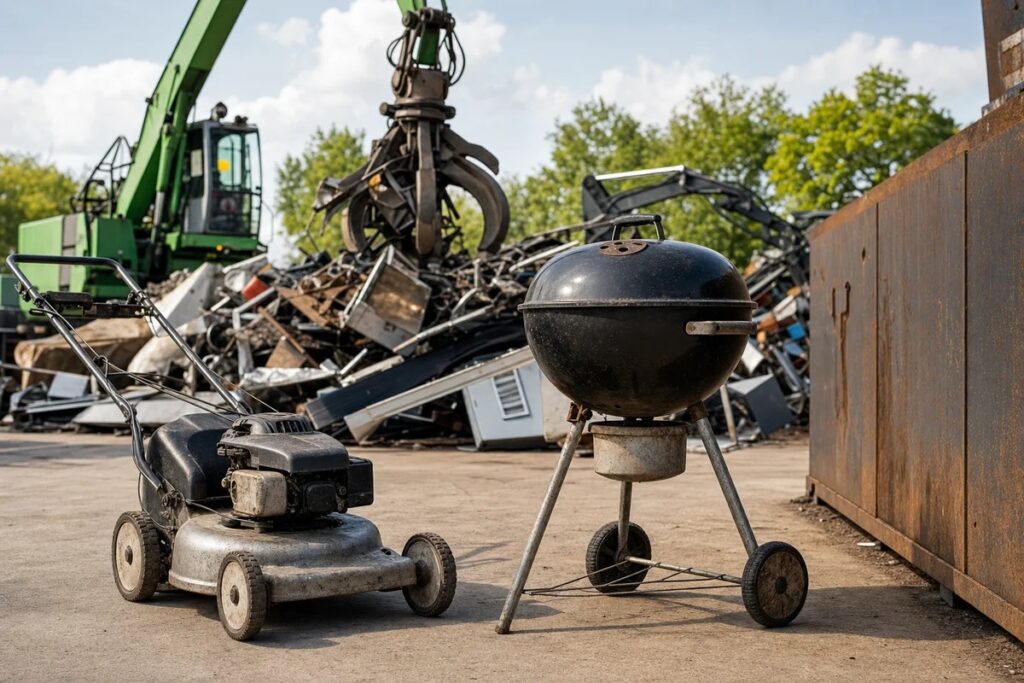
Where to take a lawn mower or barbecue grill for scrap metal recycling
Most lawn mowers and barbecue grills belong at a scrap metal yard or metal recycling center, not curbside recycling. They are bulky, mixed-material items, with steel frames, plastic trim, rubber wheels, hoses, ignition pieces, grease, and sometimes fuel, oil, batteries, or a propane tank.
If you are searching lawn mower recycling near me or barbecue grill recycling near me, start with a yard that accepts household drop-offs. The smoothest drop-offs usually meet three checks, fluids drained, propane and batteries removed, and the item being mostly metal.
Then look at the practical details. Distance matters because a 20-minute drive is easier than a 90-minute errand, many yards pay by weight, and some accept homeowner loads at the gate while others want an account first. That is why a place like Clearfield Recycling is often the right fit when you want a straightforward metal drop-off instead of curbside guesswork.
- Fluids drained keeps the load from being rejected for fire or contamination.
- Propane and batteries removed keeps you out of the wrong disposal stream.
- Mostly metal is what makes the trip worth the drive.
What happened with a couple of old lawn mowers and barbecue grills
At Clearfield Recycling, we had a customer bring in a couple of old lawn mowers and barbecue grills, and we treated them as scrap instead of trash. We drained what we could, checked for fuel and propane, and loaded the mowers and grills as scrap metal rather than sending them to the landfill.
When we weighed the load at the yard, the payout came back as only a few dollars. That made sense, because these were mostly steel items, and steel is the baseline material in scrap metal recycling. A mower deck, a grill body, and a few attached parts do have value, but they usually do not contain enough high-value metal to turn into a big check.
What mattered more was the result after the scale. We left knowing the metal would stay out of the landfill and get a second life in the recycling stream.
That is the real payoff with this kind of drop-off, especially when the items are too worn out to repair but still useful as scrap.
Which recycling spot makes the most sense for your mower or grill
When you are deciding where to recycle a lawn mower, put the decision factors in this order, acceptance rules first, payout second, travel time third. A free site that rejects fuel, batteries, or propane is not really cheap if it sends you home with the load still in the truck.
- Acceptance rules first, because a yes or no on fuel, batteries, and propane decides whether the trip works at all.
- Payout second, because a few dollars can help, but it should not override a rejection risk.
- Travel time third, because a longer drive only makes sense when the other two boxes are checked.
The three realistic options are a scrap yard, a municipal drop-off, or a haul-away service. A scrap yard is best for intact metal loads, a city site is best when you only need free disposal, and a haul-away service is best when the item is heavy, dirty, or hard to move safely.
One short example: a yard that pays by weight but rejects a fuel-filled mower or a grill with the propane tank attached can cost more in time than a paid haul. That is why a quick call matters before you load up, and it is also why Clearfield Recycling is the practical answer once your mower or grill is actually ready for scrap.
Scrap yard vs city drop-off vs haul-away service
| Payout | Prep required | Fastest use case |
| Usually low, sometimes a few dollars | Drain fluids, remove tank or battery, keep it mostly metal | Intact mower or grill with clean steel |
| Usually none | Follow site rules for fluids and parts | You only need free disposal |
| None, you are paying for pickup | Minimal, the crew handles the move | Heavy, contaminated, or awkward items |
Scrap yards usually win for intact metal, city sites work when you only need free disposal, and haul-away works for heavy or contaminated items. A quick phone call should confirm whether gasoline, oil, batteries, or propane tanks are allowed.
What to remove before you recycle a lawn mower or grill
Prep matters because fuel, pressure, batteries, and debris are the most common rejection reasons. We usually tell people to remove hazards first, then remove any loose nonmetal parts that come off easily, and stop there. Do not spend an hour stripping the frame or deck if the yard accepts mostly intact scrap.
- Remove hazards, meaning fuel, propane, and batteries.
- Clear obvious debris, like grass clumps, ash, and grease.
- Leave the structure intact unless a part detaches by hand.
For gas mowers, drain gasoline and oil if the yard will not take fluids, or follow local hazardous-waste rules for the liquids. For propane grills, remove the tank before arrival and send it to the proper exchange or hazardous drop-off stream. In both cases, keep the metal body intact unless a piece comes off easily by hand.
Gas mower prep that gets accepted
Drain gasoline and oil or follow local hazardous-waste rules if the yard will not take fluids. Remove batteries, empty the grass bag, and clear clumps from the underside of the deck. On electric-start models, check for hidden battery packs before loading, because those are easy to miss.
Grill prep that avoids rejection
Remove the propane tank before arrival and route it through an exchange cage, refill station, or hazardous drop-off. Empty ash and scrape out grease so the load is not contaminated. Leave any welded-on steel frame intact unless a part comes off easily by hand.
Why the payout is usually small for old lawn mowers and grills
Steel is the baseline, aluminum or stainless can add a little, and contamination can wipe out value fast. A small household load of a mower plus a grill often lands in the low-dollar range, and free drop-off is common when the yard has to do any cleanup.
That is why lawn mower scrap recycling near me still makes sense for broken engines, rusted frames, broken grates, and other nonrepairable metal parts. You are getting the material out of your way and keeping it in circulation, even if the check is small.
How the yard decides what your scrap is worth
The biggest value factor is metal type, followed by cleanliness, then total weight. One mower plus one grill usually counts as a small ferrous load, so the price will track the steel market more than anything else. Attached plastics, rubber wheels, and mixed fasteners lower the price or can turn it into a no-pay drop-off.
Questions people ask before they head to the scrap yard
Most of the time, the answer is visible before you leave the driveway. If the item is dry, mostly metal, and free of propane, batteries, and loose trash, it is probably ready for a scrap metal recycling near me trip. Call ahead when the rules are unclear.
Can I bring a lawn mower in with gas still in it?
No, most yards refuse fuel-filled equipment. Even a small amount of liquid fuel can get the load turned away because of fire and contamination risk.
Will a barbecue grill with the propane tank attached be accepted?
No, pressurized tanks are usually refused with the grill. Remove the tank and handle it through an exchange cage, refill station, or hazardous drop-off before you bring the grill in.
Why did the payout only come to a few dollars?
The payout was small because small steel appliances pay by weight, so the total is often in the low single digits. One or two units rarely contain enough aluminum or stainless to change the number much.
What if the mower is electric or has a battery?
Remove the battery and recycle it separately before the metal drop-off. Damaged lithium batteries belong at a battery recycler, not in a scrap pile, and corded or battery-free units are usually straightforward after that.
Ready to clear out the mower and grill pile?
If your yard still has an old mower, a rusty grill, or another metal item waiting to move, we can help you sort the prep and drop-off details. Contact Clearfield Recycling and we will help you figure out the cleanest way to bring it in.