

Metal Recycling: What to Bring and How Drop-Off Works
September 22, 2026
Recyclers Close to Me: Find the Right Facility
October 23, 2026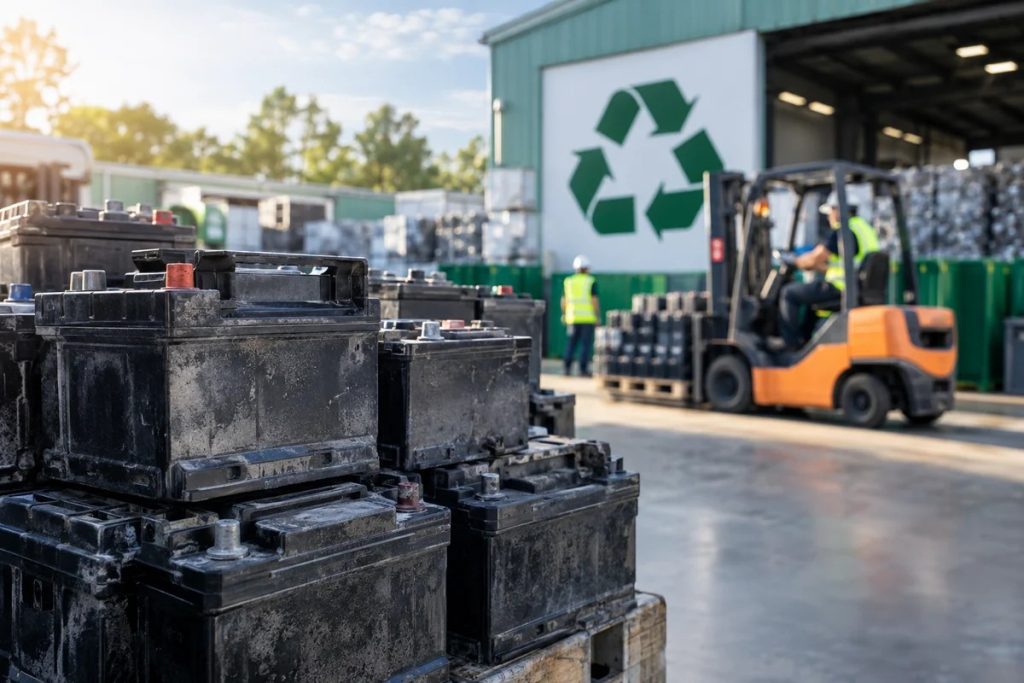
Who actually takes scrap lead acid batteries near me?
The most common places are auto parts stores, battery retailers, scrap yards, and municipal household hazardous waste drop-offs. If you are searching who recycles scrap lead acid batteries near me, start with those four because they are the places most likely to take a standard car battery without sending you across town.
Lead-acid batteries are handled separately because they contain lead and sulfuric acid, and both need controlled recovery instead of normal trash disposal. The U.S. Environmental Protection Agency says lead-acid batteries should be returned to a battery retailer or local household hazardous waste collection program, and should not go in the trash or municipal recycling bins. A local recycling site can usually tell you quickly whether your battery fits its rules.
Local places that recycle lead acid batteries
The practical options usually fall into three buckets: free recycling at a retailer or city site, a core-return program tied to a replacement battery, or a paid scrap-yard drop-off. That difference matters because scrap battery recycling near me can mean anything from a free counter handoff to a weigh-in at a metal yard. A few minutes of checking saves you from showing up with the wrong battery type, especially if you have a marine, golf cart, or backup power battery instead of a standard car unit.
In cities, suburbs, and industrial areas, you will often find the highest concentration of drop-off options near auto parts corridors, battery wholesalers, and metal recycling yards. If you are deciding where to recycle lead acid batteries, call first and ask what the site actually accepts. Some locations take only automotive batteries, while others will also take larger units after a quick call. Clearfield Recycling is a good example of the kind of local place where that first call matters, because the right answer depends on the battery size and condition.
Auto parts stores and battery retailers
Many stores take spent car batteries because they feed back into core-return systems and manufacturer recycling channels. The practical limits are worth asking about before you leave, such as whether they accept leaking batteries, non-automotive units, or only one battery per visit. Some locations also require a purchase, an original receipt, or a specific battery type before they will take the old one.
Scrap yards, metal recyclers, and battery wholesalers
These locations are common for bulk loads, older batteries, or batteries that auto parts stores will not take. You may run into weigh-in checks, ID requirements, or proof that the batteries came from a business, especially if you are dropping off multiple units. Some yards pay by the pound, while others only accept drop-off, so confirm the policy before you drive over.
How to prep a lead acid battery before drop-off
If you are figuring out where to recycle lead acid batteries, prep matters as much as the destination. Keep the battery upright, avoid shorting the terminals, and place it where it cannot tip or slide during transport. If the case looks damaged, set it in a sturdy tray or bucket before moving it. We also recommend wiping off loose dirt so the recycler can inspect the label and case without extra mess.
- Keep the battery upright from your storage spot to the drop-off counter.
- Cover the terminals with tape if the battery has exposed posts or metal caps nearby.
- Use a rigid tray, bucket, or tub if the case is cracked, swollen, or loose at the seam.
- Keep it away from tools, groceries, and anything fabric inside the vehicle.
Never open the case or try to drain acid yourself before recycling. That turns a normal drop-off into a cleanup problem, and it can damage the floor of your vehicle before you ever reach the recycler.
What to do if the battery is cracked or leaking
Do not carry a cracked or leaking battery loose in a trunk or passenger seat. Put it in a leak-resistant container, then call ahead so the recycler can confirm how they want it delivered. If acid touches skin, clothing, or the vehicle interior, clean it up immediately and follow local safety guidance before you move the battery again.
How to find a battery recycling center near me today
A fast search routine beats guessing. Start with maps, then check city recycling pages, then use retailer locators to narrow down real nearby options. If you search battery recycling center near me, do not stop at the first pin that appears. One location may accept only car batteries, while another may take larger lead-acid units or business loads.
- Search the exact local phrase, then add your city or neighborhood name.
- Open city recycling pages and retailer locators to compare accepted battery types.
- Call the location and ask about battery type, hours, appointment rules, fees, and whether proof of residence or purchase is required.
- Confirm whether they take a single battery, a few batteries, or only larger business loads.
A map result only proves the business exists. It does not prove it will take your exact battery today. If a recycling site shows up in your search, use the phone call to verify the handoff details before you load the car. That one call can save you from driving across town only to hear that the site does not accept the battery you have.
A quick search routine that works
- Use the exact search phrase, then narrow by battery type or neighborhood instead of opening every scrap listing.
- Check the business profile for battery recycling, not just metal scrap or junk removal, because those services often do not take batteries.
- Scan recent reviews for comments about hours, fees, acceptance limits, or staff turning away certain battery types.
What happens after the battery is recycled
The recovery path is straightforward. The acid is neutralized, the lead is recovered, and the plastic parts can be reused in new products. According to the U.S. Environmental Protection Agency, lead-acid batteries are one of the most recycled products in the United States, with a reported 99 percent recycling rate in 2018. The recycler sorts batteries by condition and chemistry before processing so the material can go back into production safely.
That is the real point of the system. A lead acid battery is not meant to sit in storage or end up in the landfill. It is meant to become feedstock again, which is why a local recycling site checks the condition of the battery before it enters the recycling stream.
Questions people ask before dropping off lead acid batteries
Can I recycle a cracked lead acid battery near me?
Yes, but only if the recycler can accept it in a leak-resistant tray, bucket, or sealed tote. Some sites refuse visibly leaking batteries at the counter, so call before you leave.
Do auto parts stores take every lead acid battery?
No, many stores take standard car batteries and reject some marine, golf cart, or industrial units. Some also limit customers to one battery per visit or require a purchase.
What should I ask a battery recycling center near me before I go?
Ask which battery types they accept, their hours, and whether they charge a fee or need paperwork. It also helps to confirm whether they take a single car battery or only business loads.
Can a scrap yard pay for old lead acid batteries?
Yes, some yards pay by the pound, while others offer store credit or only free drop-off. Ask about ID and weigh-in procedures before you assume they buy batteries.
Get the right drop-off on the first try
If you want help figuring out the right next step before you drive, contact us through our contact page. A quick call is usually enough to confirm whether your battery belongs at the counter, at a scrap yard, or at a municipal drop-off site.